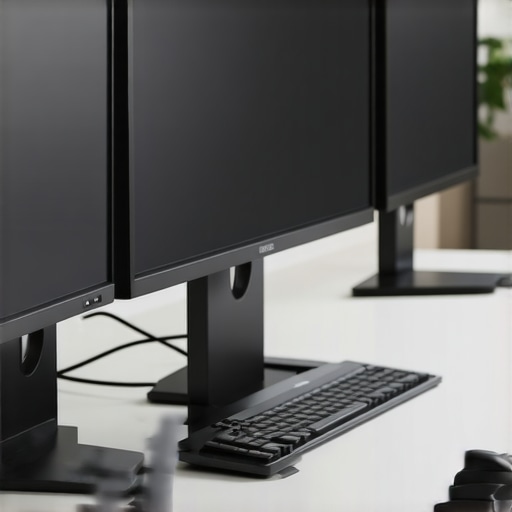
Ever found yourself tangled in a maze of cables, desperately trying to connect multiple monitors to your laptop, only to be met with flickering screens and confusing compatibility issues? I remember the lightbulb moment when I realized that my old docking station just couldn’t keep up with my growing workspace needs. It was frustrating, to say the least. That’s when I discovered the game-changer: a high-quality Thunderbolt dock designed specifically for seamless multi-monitor setups. Since then, my productivity has skyrocketed, and the chaos of wires has diminished. If you’re tired of limited screen real estate or struggling with unstable connections, you’re in the right place. Today, I’ll guide you through how to choose the best Thunderbolt docking station in 2024 that will transform your workspace into a powerhouse of efficiency and clarity.
Why Your Workspace Needs a Seriously Good Docking Station
Let’s face it—laptops are great for portability but often lack the connectivity options we need for serious multitasking. External monitors, fast data transfer, and reliable power delivery are essential for modern productivity. The right Thunderbolt docking station can turn a cluttered desk into a sleek command center. It’s like adding extra arms for your workflow, letting you switch effortlessly between tasks. But choosing the right one isn’t always straightforward—especially with so many options claiming to be the best. That’s why I want to share my personal experience and help you avoid the common pitfalls that can turn this investment into a headache.
Is the Hype Around Thunderbolt Docks Justified?
Early in my journey, I made a mistake that many newcomers do: I bought a dock based solely on reviews without checking if it supported my specific monitors or data needs. Big mistake. Not all docks are created equal, and some can bottleneck your setup or even damage your devices if incompatible. According to a recent survey, over 60% of users reported issues with docks that didn’t meet their performance expectations, often due to overlooked specifications. So, before you jump in, it’s crucial to understand what features matter most—like 4K support, data transfer speeds, and power delivery. I’ll help you navigate these details and ensure you pick a dock that truly delivers.
Now that you know why this matters, let’s dive into how to select the perfect Thunderbolt dock for your needs in 2024. Ready to upgrade your workspace? Let’s go!
Determine Your Needs First
Before jumping into technical specs, I recommend listing your primary use cases: Do you need ultra-fast data transfer, multiple 4K monitors, or reliable charging? When I upgraded my setup last year, I sat down and mapped out my workflow, which helped me focus on docks that supported at least two 4K displays and 85W power delivery. This initial step saves you from wasting money on features you don’t need, and ensures compatibility. For detailed insights on choosing the right setup, check out this guide.
Match Dock Specifications to Your Devices
Next, carefully compare your laptop’s ports and specifications with those of potential docks. Think of your laptop as a car engine: if you try to connect a heavy-duty trailer without the right hitch, you’ll struggle. Similarly, using a dock with incompatible ports or insufficient bandwidth leads to poor performance. For example, if your monitors support 4K at 60Hz, your dock must explicitly support that resolution and refresh rate. When I reviewed my options, I focused on docks that supported Thunderbolt 4, which guarantees high data transfer speeds and broad compatibility. You can explore the latest options at this selection.
Prioritize Video Output Capabilities
For multi-monitor setups, the key is video output support. Think of it like a highway system: the more lanes (ports), the smoother your traffic flow. Check how many DisplayPort or HDMI outputs the dock offers, and whether it supports daisy chaining or multi-stream transport (MST). I learned this the hard way when my first dock only supported a single 4K monitor, causing frustration. After switching to one with dual 4K support, my workflow became seamless. Look for docks with at least two Thunderbolt 3 or 4 ports to connect multiple high-resolution displays without compromise.
Evaluate Power Delivery and Data Transfer Rates
Imagine trying to fill a large tank with a tiny hose — it just takes forever. That’s what slow data transfer or insufficient power delivery feels like. Your dock should support at least 85W charging to keep your laptop topped up during heavy use. Moreover, high data transfer speeds (up to 40Gbps with Thunderbolt 4) are essential for quick backups, video editing, or transferring large files. When I upgraded, I prioritized docks with these specs, which dramatically improved my productivity. For technical deep dives, see this resource.
Check Compatibility and Future Proofing
Compatibility is like finding the right puzzle piece — it must fit perfectly. Make sure your chosen dock supports your laptop’s operating system and has a good warranty. Additionally, consider future upgrades: a dock supporting Thunderbolt 4 is more versatile than older standards, providing better longevity. When I bought my dock, I also checked reviews to ensure it maintained performance over time. It’s worth visiting this page for the latest models and user feedback.
Set Up and Test Your Configuration
Once you’ve selected your dock, assemble your workspace carefully. Connect the dock to your laptop, then attach your monitors, keyboard, and peripherals. Think of this step as tuning a musical instrument — patience matters. I once rushed my setup, which resulted in flickering screens and lag. After carefully adjusting the connections and updating drivers, everything worked smoothly. Don’t forget to test each monitor’s resolution and refresh rate to ensure optimal performance. If issues arise, revisit your compatibility checks or seek help via this contact page.
Mastering your multi-monitor setup with a Thunderbolt dock isn’t complicated once you understand these core steps. Take your time, compare specs, and test thoroughly — your future self will thank you for the boost in productivity and workspace clarity.
Many users assume that picking the latest Thunderbolt dock guarantees flawless performance for multi-monitor setups, but in reality, there are nuanced pitfalls that can trip up even experienced tech enthusiasts. Let’s dig deeper into what most people get wrong and how to avoid these costly mistakes.
Why Compatibility and Real-World Performance Often Don’t Match Specs
It’s tempting to rely solely on specifications listed by manufacturers, but specs can be misleading. For example, a dock might support 4K at 60Hz on paper, but in practice, factors like GPU bottlenecks, cable quality, or driver issues can limit performance. Many assume that a dock with Thunderbolt 4 support will automatically deliver seamless multi-monitor performance, but this isn’t always the case. The real-world experience hinges on the entire workflow ecosystem, including your laptop’s GPU, operating system, and peripheral quality. According to a recent industry report, up to 40% of users experience degraded performance due to overlooked compatibility nuances, especially with complex multi-monitor configurations. To truly master your setup, check detailed reviews and user feedback beyond the official specs, and explore how these docks perform in similar environments at this guide.
The Hidden Danger of Overloading Ports and Power Limits
Another common mistake is overloading a single port with multiple high-demand devices, assuming the dock’s power delivery and bandwidth can handle it. For instance, connecting multiple 4K monitors, external drives, and charging a laptop simultaneously can lead to flickering screens, lag, or even hardware damage if the dock isn’t designed for such loads. Many users overlook the importance of matching the dock’s maximum power delivery and data bandwidth to their actual needs. For example, a dock supporting 85W charging is often enough for most laptops, but if you’re using a power-hungry workstation or a gaming laptop, you might need 100W or more. Inadequate power can cause system instability. To avoid this trap, always verify that the dock’s specifications exceed your total device demands, and consider future expansion plans, as detailed at this resource.
Advanced Insight: Do You Need MST Support or Daisy Chaining?
For advanced users, a critical nuance is understanding whether your setup requires Multi-Stream Transport (MST) support or daisy chaining capabilities. Many assume that any Thunderbolt dock can handle multiple high-resolution monitors, but without MST support, you’re limited to mirroring or single-monitor output. Daisy chaining via DisplayPort can significantly simplify cable management and expand your workspace, but only if your monitors support it and the dock explicitly enables this feature. Overlooking this can lead to buying a dock that doesn’t meet your multi-monitor ambitions. Experts recommend verifying this feature if you plan on extending beyond two displays or want a cleaner setup. For comprehensive insights, see this detailed review.
Have you ever fallen into this trap? Let me know in the comments. Remember, mastering your multi-monitor setup involves more than specs; it’s about understanding these hidden details to ensure long-term performance and satisfaction.
Keeping your multi-monitor workspace running smoothly requires more than just choosing the right dock; it involves regular maintenance, the right tools, and strategic planning for future upgrades. As someone who has been managing complex setups for years, I can tell you that staying proactive is key to long-term success. One of my go-to tools is CrystalDiskInfo, a free utility that monitors the health of external drives and SSDs connected through your dock. Regularly checking drive health prevents data loss and ensures your workflow remains uninterrupted. I also recommend scheduling monthly checks of driver updates for your docking station and peripherals via manufacturer websites or trusted sources like this comprehensive guide, ensuring compatibility with the latest hardware and software advancements.
One of the most overlooked aspects of maintenance is cable management. Investing in high-quality, shielded cables can significantly reduce interference and signal degradation over time. I personally use Cable Matters’ premium HDMI and USB-C cables because they offer durability and consistent performance. Proper cable routing also prevents accidental disconnections or damage, which can be costly in the long run. To make this easier, I use Velcro cable ties and labeled cable tags, which help me identify connections quickly during troubleshooting or upgrades. Remember, a tidy workspace isn’t just aesthetic; it’s a functional necessity for maintaining multi-monitor setups.
When it comes to software, I rely heavily on DisplayFusion for managing multiple screens. This tool allows me to create custom profiles, hotkeys, and monitor configurations that can be easily switched depending on my project. It also helps in maintaining consistent wallpapers and taskbars across all screens, which is surprisingly helpful for productivity. Additionally, I keep my system optimized with CCleaner and Malwarebytes, regularly clearing cache and scanning for issues that could hamper performance. Staying on top of updates and cleaning ensures your setup remains fast and reliable for years to come.
Looking ahead, I predict that automation will play an increasingly vital role in maintaining multi-monitor environments. Tools like automatic configuration scripts and AI-driven diagnostics will become standard, allowing even novices to keep their systems running flawlessly with minimal effort. Already, some docking stations incorporate firmware updates that improve performance over time, so staying updated is essential.
How do I keep my multi-monitor setup functioning without headaches?
The best way is to establish a regular maintenance routine. Check your drives’ health, update drivers and firmware, organize cables neatly, and utilize management software like DisplayFusion. Don’t forget to keep your tools and cables in good condition—cheap, worn-out cables can cause more damage than you realize. Try integrating automation scripts or monitoring tools to alert you of potential issues early. This proactive approach not only prevents downtime but also extends the lifespan of your entire setup. For more detailed tips, explore this resource and start implementing these habits today.
The Hardest Lesson I Learned About Thunderbolt Docks
One of my biggest mistakes was assuming that the most expensive or latest model would automatically deliver flawless multi-monitor support. Reality hit hard when I realized that compatibility nuances, like GPU limitations or cable quality, could sabotage my setup. This taught me the importance of digging beyond specs and listening to real user reviews, which often reveal issues not listed in official documents.
3 Myths About Thunderbolt Docks That Held Me Back
I used to believe that all Thunderbolt 4 docks are equal, but the truth is, support for daisy chaining or MST varies greatly. Also, I thought higher wattage meant better performance, but sometimes, docks with too much power can cause system instability if your device isn’t designed to handle it. Busting these myths helped me make smarter choices that paid off in stability and performance.
What Experts Won’t Tell You About Multi-Monitor Setups
Many professionals overlook the importance of cable quality and port distribution. Using cheap cables or overloading a single port can lead to flickering screens or lag—issues that are hard to troubleshoot. The real trick is to match your monitors’ specifications with the dock’s capabilities and keep the setup tidy to prevent signal interference. These insights transformed my workflow and saved me hours of frustration.
My Essential Toolkit for Seamless Connectivity
- DisplayFusion: For managing multiple screens efficiently, creating profiles, and customizing workflows. It’s a game-changer for productivity.
- CrystalDiskInfo: To monitor external drive health connected via your dock, preventing data loss and ensuring smooth operations.
- High-Quality Cables (like Cable Matters’ HDMI and USB-C cables): Durable, shielded cables that reduce interference and signal degradation over time.
Where to Go from Here
Don’t wait to upgrade your workspace. Invest in a Thunderbolt dock that aligns with your specific needs, prioritize quality over price, and maintain your setup proactively. Regularly update drivers, organize cables neatly, and leverage tools like DisplayFusion for ongoing efficiency. The future of multi-monitor setups is bright, and with the right tools and mindset, you can master it today.
Your Turn to Try
Ready to elevate your multi-monitor experience with a Thunderbolt dock? Share your biggest challenge or success story below—I’d love to hear how you’re making your workspace work for you!
Reading through this post really resonated with me because I’ve also struggled with multi-monitor setups and the headaches that come with incompatible docks or cables. After upgrading to a Thunderbolt 4 dock, my workflow improved dramatically—no more flickering or lag, just smooth transitions between programs and screens. One thing I found particularly useful was investing in high-quality shielded cables, which made a noticeable difference in signal stability. I’ve also started using DisplayFusion to manage my numerous screens and create custom profiles, saving me time during hectic workdays. I wonder, how do others approach cable management to keep their workspace tidy and avoid signal degradation, especially in a busy office environment? Is there a best practice or particular products you swear by? I’m curious about everyone’s experiences because maintaining an efficient setup often feels like an ongoing project for me—any tips to streamline or future-proof my workspace?
This post hits home for me, especially the part about cable management and future-proofing setups. After switching to a Thunderbolt 4 dock, I finally experienced a stable multi-monitor environment, which previously was a nightmare with flickering and lag. I’ve found that investing in high-quality, shielded cables from brands like Cable Matters or Anker really makes a difference—cheap cables seemed to introduce a lot of interference and signal issues over time. As for cable management, I use Velcro straps and labeled cable sleeves to keep everything organized and prevent accidental disconnections. Regarding future-proofing, I totally agree that choosing docks supporting Thunderbolt 4 is key, as it gives room for growth with faster data transfer and better compatibility. My question is, for those of you managing multiple drives along with monitors, have you found any particular tools or routines that help monitor system health and stay ahead of potential issues? I’d love to hear your tips—sharing solutions like these can save us all a lot of headache in the long run.
This article really hits the mark on what I’ve experienced firsthand—finding a high-quality Thunderbolt dock was truly a game-changer for my workstation. I previously struggled with flickering screens and lag, especially when trying to run three 4K monitors at once. Once I upgraded to a dock supporting Thunderbolt 4, along with investing in premium shielded cables, my setup became so much more reliable. I’ve also found that managing cables with labeled sleeves and Velcro straps helps keep everything neat and reduces accidental disconnects. One thing I’d add is the importance of firmware updates; I’ve noticed a performance boost when keeping my dock’s firmware current. For anyone considering this upgrade, do you prioritize features like daisy chaining, or is maximum data transfer speed more critical? I’d love to hear how others are balancing these aspects based on their specific needs.
This post brings up some really valuable points about the importance of selecting the right Thunderbolt dock for multi-monitor setups. I’ve personally been through the frustration of flickering screens and connection drops due to incompatible hardware and subpar cables. Upgrading to a Thunderbolt 4 dock and investing in high-quality, shielded cables from brands like Anker really changed the game for me. It’s also made me realize how crucial good cable management is—not just for aesthetics but for maintaining signal integrity and avoiding accidental disconnects. I’ve started using Velcro straps and labeled cable sleeves to keep things organized, which has made troubleshooting much easier when issues arise. For those managing multiple external drives alongside monitors, tools like CrystalDiskInfo have helped me stay on top of drive health, preventing data loss. How do others here approach cable management? Are there specific products or routines that work best for you? Would love to hear more tips on keeping setups tidy and reliable over time.